Australians who unite us
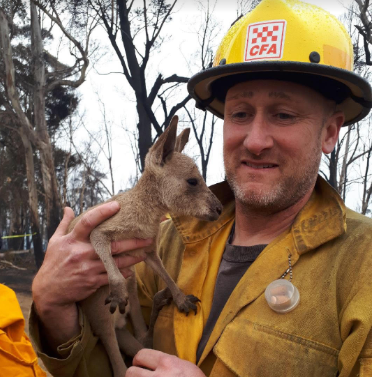
Australianism is already visible every day. A firefighter protects a stranger's home. A surf lifesaver rescues someone they have never met. An SES volunteer turns up after a storm. Paramedics, police, doctors and nurses help people without first asking their ancestry, religion or politics. Sporting-club volunteers, carers, blood donors, service personnel and neighbours do the same.
It is visible when Australians stand beside one another after tragedy, when people defend a neighbour from prejudice, when migrants embrace Australia and when Australian-born citizens welcome newcomers.
One Australian needs help. Another Australian helps.
Need a hand, mate? That is mateship. That is the fair go. That is Australianism in practice.
A worthwhile life need not be measured only by what we achieve for ourselves, but also by what we contribute to others. Service can take many forms: caring for family, volunteering, helping neighbours or supporting the community. It asks us to look beyond ourselves.
Australianism is not monoculturalism

Australians can be proud of Greek, Italian, Indian, Vietnamese, Irish, Chinese, Lebanese, Indigenous or countless other histories. They can practise a faith or no faith. They can preserve food, language, family customs and traditions.
The common civic identity sits above those differences in our shared national life.
Preserve your heritage. Practise your faith. Celebrate your ancestry. In our common national life, we meet one another as Australians.
The Australian way: mateship, a fair go and civil disagreement
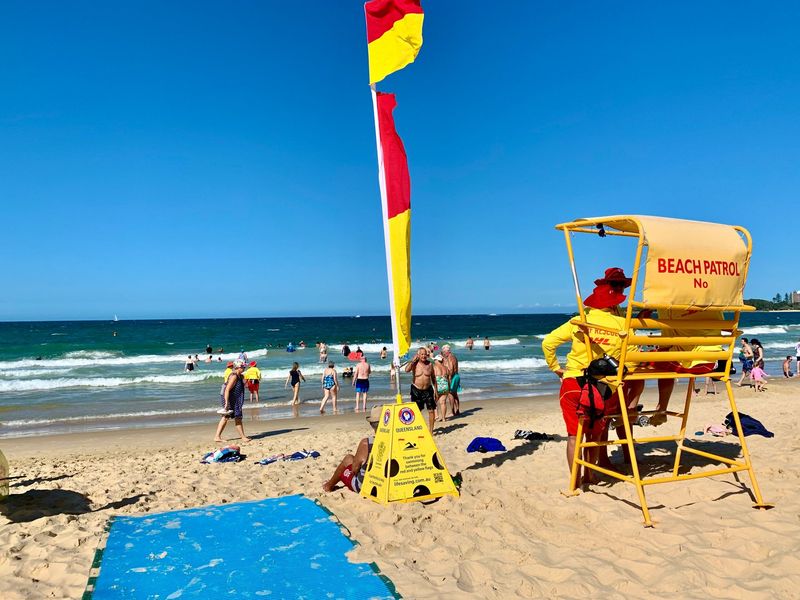
Mateship has sometimes been associated with an older, predominantly male Australia. We use it more broadly. Modern Australian mateship belongs to women and men, young and old, Indigenous Australians, long-established families and people who arrived yesterday.
A mate is not a type of Australian. A mate is another person we recognise as one of us. 'G'day, mate' says: I recognise you. 'Need a hand, mate?' says: I will help you. 'Play the ball, not the man' says: I can disagree without attacking your humanity.
Individual identities do not have to be surrendered before Australians can share something larger.
Your individual identity is yours. Our Australian identity is ours.
The fair go: fairness, opportunity and success
The fair go is more than an Australian expression. Australia has built major institutions around the idea that people should have opportunity and that illness, disability, unemployment or old age should not simply leave a fellow Australian abandoned.
Medicare, the NDIS, the Age Pension, unemployment assistance and compulsory superannuation differ greatly in purpose and eligibility. Together they illustrate an Australian instinct for practical fairness and social protection based principally on circumstances and entitlement rather than race or religion.
A fair go also includes the opportunity to succeed. Lawful success earned through work, enterprise, innovation, investment, skill or calculated risk should not be treated as something requiring apology. Successful Australians create businesses, employment, knowledge, tax revenue, philanthropy and opportunity.
Fairness does not mean equal outcomes. It means reasonable opportunity, a safety net for genuine need, rules applied fairly, and the expectation that those who can contribute should do so.
A fair go includes the freedom to succeed - and the responsibility to give others a fair go too.
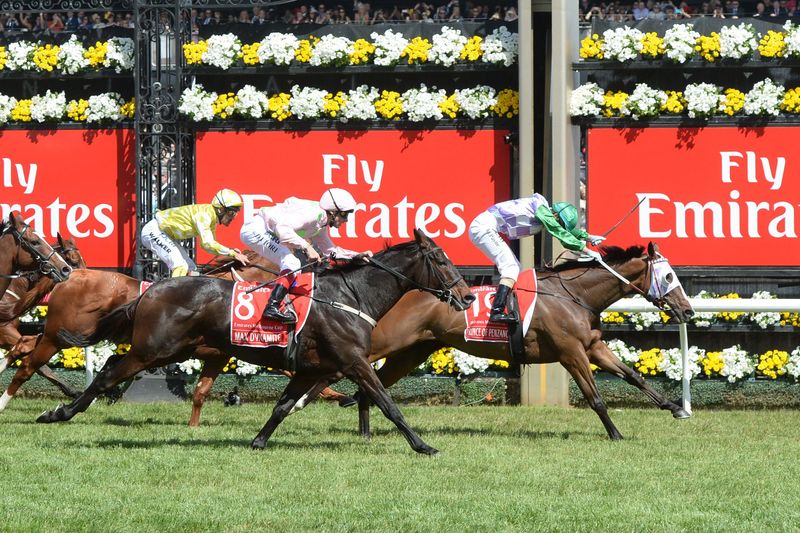
The 2015 Melbourne Cup offers an unforgettable illustration of opportunity and achievement. Prince of Penzance won at odds of 100 to 1, ridden by Michelle Payne, the first woman jockey to win the Melbourne Cup. Both horse and rider defied expectations on one of Australia’s biggest sporting stages. Their achievement reminds us that talent and determination deserve a chance to be recognised, even when others see only an outsider. A fair go means having the opportunity to prove what you can do, not being judged solely by where you came from.
A fair day's pay for a fair day's work. It is an old Australian expression with deep roots in our working history, and it captures something important about the fair go. People who contribute through their work deserve fair reward. But fairness runs both ways: fair reward carries an expectation of fair contribution.
Events that bring Australians together
Australians do not merely live alongside one another. At our best, we turn up together.
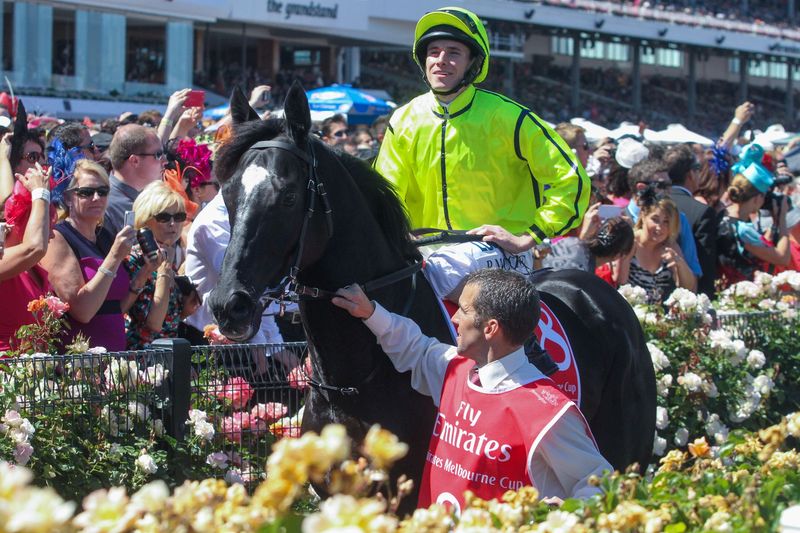
Sport has an extraordinary capacity to bring Australians together across ancestry, religion, politics and background. An AFL Grand Final can bring around 100,000 people into the Melbourne Cricket Ground, with millions more watching elsewhere. The Melbourne Cup, long described as 'the race that stops the nation', has also created shared memories across generations. Racing heroes such as Phar Lap and Makybe Diva became part of Australian popular history, drawing enormous public interest in very different eras. International sporting contests, the Australian Open, cricket, community festivals, concerts, Anzac Day commemorations and other shared occasions likewise create moments in which difference recedes and a common Australian identity becomes visible.
Not every Australian follows the same sport or attends the same event. The principle is broader: shared national experiences help turn a population into a community. Sport can also help newcomers become participants in Australian life. A child who joins a local football, cricket, soccer, netball or other sporting club does more than learn a game: families meet other families, newcomers encounter Australian expressions and traditions, and teammates from different backgrounds depend upon one another. Nobody has to surrender where they came from. They are joining something.
Sport is a uniter, not a divider. Australia is strongest when Australians have reasons to stand, cheer, commemorate and participate together.
One national flag - and the unifying power of sport
The Australian National Flag is the principal national symbol that belongs equally to Australians of every ancestry, religion and political persuasion. Other flags can legitimately represent particular communities, histories or causes, but at official national and government occasions the Australian flag should be the clear centrepiece.
The flag itself tells part of Australia's national story. Its Union Jack reflects an important part of Australia's historical inheritance, the Commonwealth Star represents Federation, and the Southern Cross places Australia beneath the southern skies. The present flag grew from a public competition held after Federation in 1901, which attracted 32,823 entries.
Many flags can tell parts of Australia's history. Only one flag represents Australia as a nation.
That is also the meaning of the name Only One Flag. It does not mean that other flags have no place. It means that when Australians of every ancestry, religion and background come together as Australians, the Australian National Flag is the flag that represents the nation we share.
Sport demonstrates Australianism unusually well. When Australians represent the country at the Olympics, in international cricket, soccer, rugby or other national competition, they do not compete as separate ancestral communities. They represent Australia.
Australian sport can celebrate particular histories - including Indigenous rounds and special cultural occasions - without altering the underlying national identity. Recognition can add to the Australian story without replacing it.
Australians should be proud to fly and display the Australian National Flag.
Service, sacrifice and respect
Australia's freedoms did not simply appear. Generations of Australians have served in war, peacekeeping and the defence of the country. Some were killed. Others returned physically or psychologically changed by their service. Their families also carried part of that burden.
Australians can disagree about individual wars, military decisions and the governments that sent Australians into conflict. Respect for those who served does not require unquestioning support for every war. Governments make decisions about war; service personnel carry out their duty on behalf of Australia.
Anzac Day and Remembrance Day therefore have a special place in our national life. They are occasions for remembrance, gratitude and reflection rather than ordinary political contest.
Veterans who have served Australia should be treated with respect and dignity, including when they require assistance arising from that service. A country that asks people to risk their lives on its behalf acquires responsibilities to them when they return.
Protest is a democratic freedom - one of the freedoms Australian service personnel have helped defend. Freedom also carries judgement and responsibility. Australians should preserve the dignity of occasions specifically set aside to honour those who served and those who did not return.
Remember the fallen. Respect those who served. Care for those who came home.